
Hybrid and remote work have redefined how teams collaborate, making meetings more critical—and more complex—than ever.
In 2026, AI meeting bots have evolved from nice-to-have tools into essential productivity partners. These intelligent assistants don’t just take notes—they actively improve meeting quality, cut administrative work, and turn discussions into clear, actionable results.
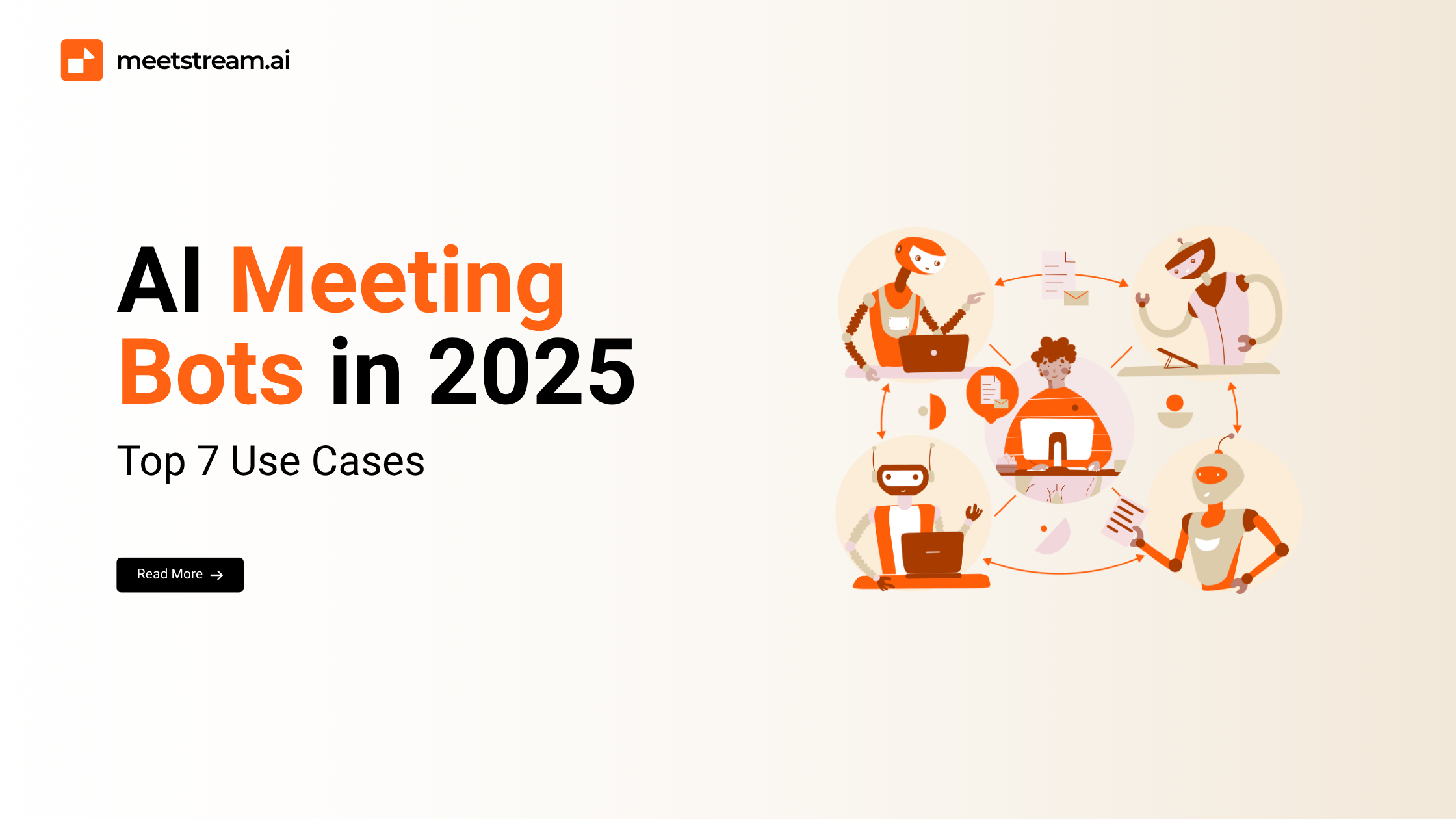
Powered by advances in natural language understanding, real-time processing, and seamless integrations, they can transcribe, summarize, extract tasks, ensure compliance, and sync with your workflow automatically. In this post, we’ll explore seven real-world use cases showing how AI meeting bots are transforming workplace communication and collaboration.
7 AI Meeting Bot Use Cases at a Glance
| Use Case | What the Bot Does | Who Benefits Most |
|---|---|---|
| Real-Time Transcription | Live, speaker-labeled transcripts across Zoom, Meet, Teams | All teams, especially distributed/global |
| Action Item Extraction | Detects tasks, assigns owners, pushes to project tools | Product, engineering, cross-functional teams |
| Auto-Summarization | Generates structured meeting minutes in seconds | Leadership, customer success, product teams |
| Pre-Meeting Briefings | Aggregates context from past meetings, CRM, docs | Sales, account management, recurring syncs |
| Smart Scheduling | Finds optimal time slots across time zones and priorities | Remote-first teams, executives |
| Compliance Logging | Encrypted audit trails with role-based access | Healthcare, legal, financial services |
| Sentiment Monitoring | Analyzes tone, talk ratios, engagement signals | Sales, recruiting, customer success |
1. Real-Time Transcription Across Platforms
Today’s AI meeting bots can join meetings across platforms like Zoom, Microsoft Teams, Google Meet, and Webex to deliver live, accurate, and multi-speaker transcriptions as conversations unfold.
These real-time transcriptions aren’t just fast—they’re context-aware, speaker-labeled, and often multi-lingual, supporting global and distributed teams.
This feature reduces cognitive load, especially for non-native speakers, late joiners, or participants in complex technical discussions. Instead of multitasking between talking and taking notes, attendees can stay engaged knowing that a searchable, timestamped transcript will be available for review.
From legal and compliance audits to client briefings and product meetings, real-time transcription ensures that every word counts—and nothing gets lost.
Key capabilities:
- Automatic speaker identification and diarization
- Time-stamped transcripts
- Multi-language transcription
- Integration with documentation platforms
2. Instant Action Item and Task Extraction
One of the most valuable innovations in AI meeting assistants is their ability to detect action items, decisions, and follow-up tasks in real-time. As team members discuss deliverables, deadlines, or decisions, the AI bot automatically extracts these insights, assigns them to the relevant team members, and pushes them into tools like Asana, Trello, Jira, Notion, or ClickUp.
This seamless integration of conversation and execution closes the loop between talking and doing, eliminating the manual effort often involved in post-meeting coordination. The system can infer urgency, project context, and task dependencies from the conversation flow, reducing ambiguity and missed follow-ups.
Not only does this accelerate workflows, but it also increases accountability and transparency, critical for high-velocity teams operating across functions, time zones, or departments.
Real-world benefits:
- No more forgotten tasks
- Clear ownership and deadlines
- Streamlined team collaboration
- Reduced reliance on manual notes or reminders
3. Auto-Summarization and Meeting Minutes Generation
AI-driven summarization tools now produce structured, unbiased, and contextually relevant summaries of meetings within seconds of conclusion. Instead of assigning someone to manually compile minutes, AI bots use natural language processing to identify key themes, decisions, blockers, and action items, and format them into easy-to-digest sections.
These meeting summaries can be:
- Organized by speaker or agenda topic
- Delivered via Slack, email, or calendar follow-ups
- Synced into team knowledge bases like Notion, Confluence, or SharePoint
The result? Teams spend less time recapping and more time executing. Leaders can quickly review summaries without rewatching recordings, and absent stakeholders can stay informed without disrupting others for updates.
This is particularly impactful in organizations with high meeting volumes, such as product development teams, customer success groups, and cross-functional leadership squads.
4. Contextual Reminders and Pre-Meeting Briefings
One of the most underutilized but high-impact use cases of AI meeting bots in 2026 is their ability to provide context-rich pre-meeting briefings. Rather than entering a meeting cold or scrambling through old notes, participants receive an automated, personalized digest that aggregates relevant content from prior interactions, documents, and tools.
These briefings often include:
- Summaries from previous meetings
- Unresolved action items
- Open questions or decisions pending
- Linked documents or communications
- Calendar invites and meeting objectives
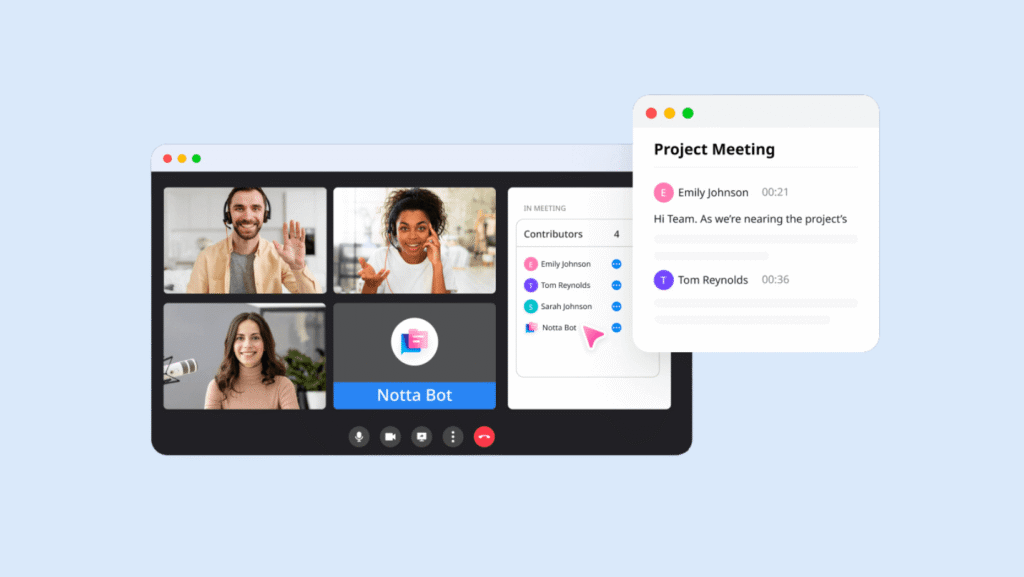
The bot pulls this information from project management tools (like Jira, Trello), email threads, Slack messages, CRM platforms, and previous transcripts—consolidating fragmented data into a cohesive prep sheet.
This not only aligns attendees on key priorities but also significantly reduces repetitive discussions and accelerates meeting momentum. It’s especially valuable in recurring formats like daily stand-ups, design reviews, weekly syncs, or client status updates, where context continuity is crucial.
For example, sales teams can receive pre-briefs highlighting client history, last call notes, deal stage, and pipeline metrics, while product managers may see recent customer feedback, backlog updates, and design mockups—all dynamically generated before the meeting starts.
5. Smart Calendar and Scheduling Assistants
In globally distributed teams, coordinating calendars can be a nightmare. That’s where AI meeting bots step in as intelligent scheduling assistants—analyzing availability, work patterns, meeting history, time zones, and even participant preferences to suggest the best possible time slots.
These bots can:
- Automatically find overlapping free slots across participants
- Reschedule or deprioritize low-value meetings
- Adapt to real-time changes in availability
- Integrate with Google Calendar, Microsoft Outlook, Apple Calendar, and enterprise tools
What makes this functionality even more powerful is its contextual intelligence. AI bots don’t just look at open time slots—they weigh urgency, priority, and even project deadlines to determine what meetings to prioritize. For example, a client escalation may automatically bump a team retro to a later time.
This is a game-changer for remote-first and hybrid teams, where scheduling friction can slow progress. By eliminating endless back-and-forth emails or Slack messages, these bots unlock hours of productivity every week.
MeetStream.ai enables this level of control via APIs that let developers define custom rules, triggers, and constraints—perfect for companies that want to build scheduling logic directly into internal tools or customer portals.
6. Compliance and Audit Logging
For regulated industries like healthcare, financial services, legal, and government, AI meeting bots now offer robust solutions for secure recordkeeping and compliance tracking, replacing manual, error-prone processes with structured, automated logging.
These bots create and store:
- Full meeting transcripts with timestamps
- Highlighted decisions and resolutions
- Lists of assigned tasks and deadlines
- Historical versions and edit trails
The records are encrypted at rest and in transit, with role-based access controls, user permissions, and custom retention policies. Organizations can determine who can view, edit, or export meeting data, helping ensure compliance with data privacy laws such as GDPR, HIPAA, CCPA, and SOC 2 standards.
These audit logs not only simplify internal reviews and legal discovery processes but also act as a central source of truth, reducing disputes and enabling traceability in critical decision-making environments.
7. Real-Time Coaching and Sentiment Monitoring
AI meeting bots are evolving from passive observers to intelligent communication coaches, capable of analyzing tone, engagement levels, and conversation quality, not just the words spoken. In 2026, leading-edge bots can monitor and interpret subtle interaction cues during meetings, offering deep insight into the emotional dynamics, communication patterns, and team psychology.
Using techniques from natural language processing (NLP), sentiment analysis, and behavioral analytics, these bots evaluate:
- Talk-to-listen ratios
- Filler word usage (e.g., “um,” “like”)
- Interruption frequency
- Sentiment shifts and mood changes
- Vocal tone and pacing
- Engagement signals or signs of disinterest
This functionality is especially valuable in communication-intensive roles like sales, recruiting, coaching, and customer success. For example, during a sales call, the bot might detect dominance in conversation by the rep or a drop in enthusiasm from the prospect—signals that suggest a need for recalibration.
In interviews, it helps ensure conversations remain equitable and respectful. In support scenarios, it can flag low-empathy interactions or detect rising frustration—enabling post-meeting coaching before customer dissatisfaction escalates.
To protect psychological safety and minimize distractions, feedback is delivered privately after the meeting via personal analytics dashboards or performance reports. This empowers individuals to improve their communication style, identify blind spots, and hone emotional intelligence—all without public feedback or judgment.
How Developers Build These Features with MeetStream API
Behind today’s smartest AI meeting bots is MeetStream.ai—a developer-friendly platform built for speed, scale, and seamless integration. Whether you’re building an internal productivity tool or a SaaS product for thousands, MeetStream gives you everything you need to launch intelligent meeting automation with just a few lines of code.
Here’s how to send a bot to a meeting and get a real-time transcript, recording, and summary:
curl -X POST https://api.meetstream.ai/v1/bots
  -H "Authorization: Bearer YOUR_API_KEY"
  -H "Content-Type: application/json"
  -d '{
    "meeting_url": "https://meet.google.com/abc-defg-hij",
    "bot_name": "AI Assistant",
    "features": {
      "transcription": true,
      "recording": true,
      "summary": true,
      "action_items": true,
      "sentiment_analysis": true
    },
    "webhook_url": "https://your-app.com/webhooks/meeting-data"
  }'
With a single API call, your bot joins any Zoom, Google Meet, or Microsoft Teams meeting and starts capturing transcription, recording, action items, and sentiment data. Results are delivered to your webhook in real-time.
What you can build with MeetStream:
- Transcribe in Real Time: Capture accurate, multi-speaker transcripts across Zoom, Google Meet, Teams, and more—with speaker labels and timestamps.
- Trigger Actions Instantly: Use webhook-based automation to update CRMs, send follow-ups, or log key moments—all while the meeting is still happening.
- Auto-Summarize & Extract Tasks: Generate clean, structured summaries and push action items to tools like Notion, Asana, ClickUp, or Trello—no manual cleanup needed.
- Integrate Everywhere: Plug into Slack, Salesforce, HubSpot, calendars, wikis, and dashboards—wherever your team works.
- Scale Without Limits: MeetStream’s architecture is built for high-volume, multi-tenant setups, so your bots can grow with your business.
With MeetStream.ai, you skip the hard engineering and focus on building AI meeting experiences your users will actually love.
Related Guides
- What Is an AI Meeting Bot? The Complete Guide
- Meeting Bots for Sales Coaching: A Complete Guide
- Speaker Diarization at Scale: Techniques & Architecture
- MeetStream vs Recall.ai: Complete API Comparison
- How to Record a Zoom Meeting: Complete Guide
- Google Meet Transcription Bot: How to Build One
Final Thoughts
In 2026, AI meeting bots aren’t just note-takers—they’re smart teammates. From live transcriptions to pulling action items, tracking sentiment, and even scheduling follow-ups, they turn every meeting into meaningful progress.
As remote work becomes the norm, these bots keep everyone aligned, focused, and moving forward.
MeetStream.ai makes it easy to build your own AI meeting assistant with real-time transcription, smart summaries, and seamless integrations—ready to launch in minutes.
Visit MeetStream.ai and bring your meetings to life with intelligent automation.
What are the most common use cases for AI meeting bots?
The top use cases include real-time transcription, automatic action item extraction, meeting summarization, pre-meeting briefings, smart scheduling, compliance audit logging, and real-time sentiment monitoring and coaching.
How do AI meeting bots extract action items from meetings?
AI meeting bots use natural language processing to detect tasks, decisions, and follow-ups during conversations. They automatically assign action items to team members and push them into project management tools like Asana, Jira, Trello, or Notion.
Can AI meeting bots help with compliance and audit requirements?
Yes. AI meeting bots create encrypted, timestamped audit trails with role-based access controls. They support compliance with GDPR, HIPAA, CCPA, and SOC 2 standards, making them valuable for healthcare, legal, and financial services organizations.
How do developers add AI meeting bot features to their apps?
Developers use meeting bot APIs like MeetStream to add transcription, recording, summarization, and action item extraction to their applications. A single API call sends a bot to any Zoom, Google Meet, or Teams meeting to capture data in real-time.
What is sentiment analysis in AI meeting bots?
Sentiment analysis uses NLP and behavioral analytics to evaluate tone, talk-to-listen ratios, interruption frequency, and engagement signals during meetings. This data helps with sales coaching, recruiting evaluations, and customer success interactions.
Which meeting platforms do AI meeting bots support?
Most AI meeting bots support Zoom, Google Meet, Microsoft Teams, and Webex. Developer platforms like MeetStream provide universal API access across all major video conferencing platforms through a single integration.